
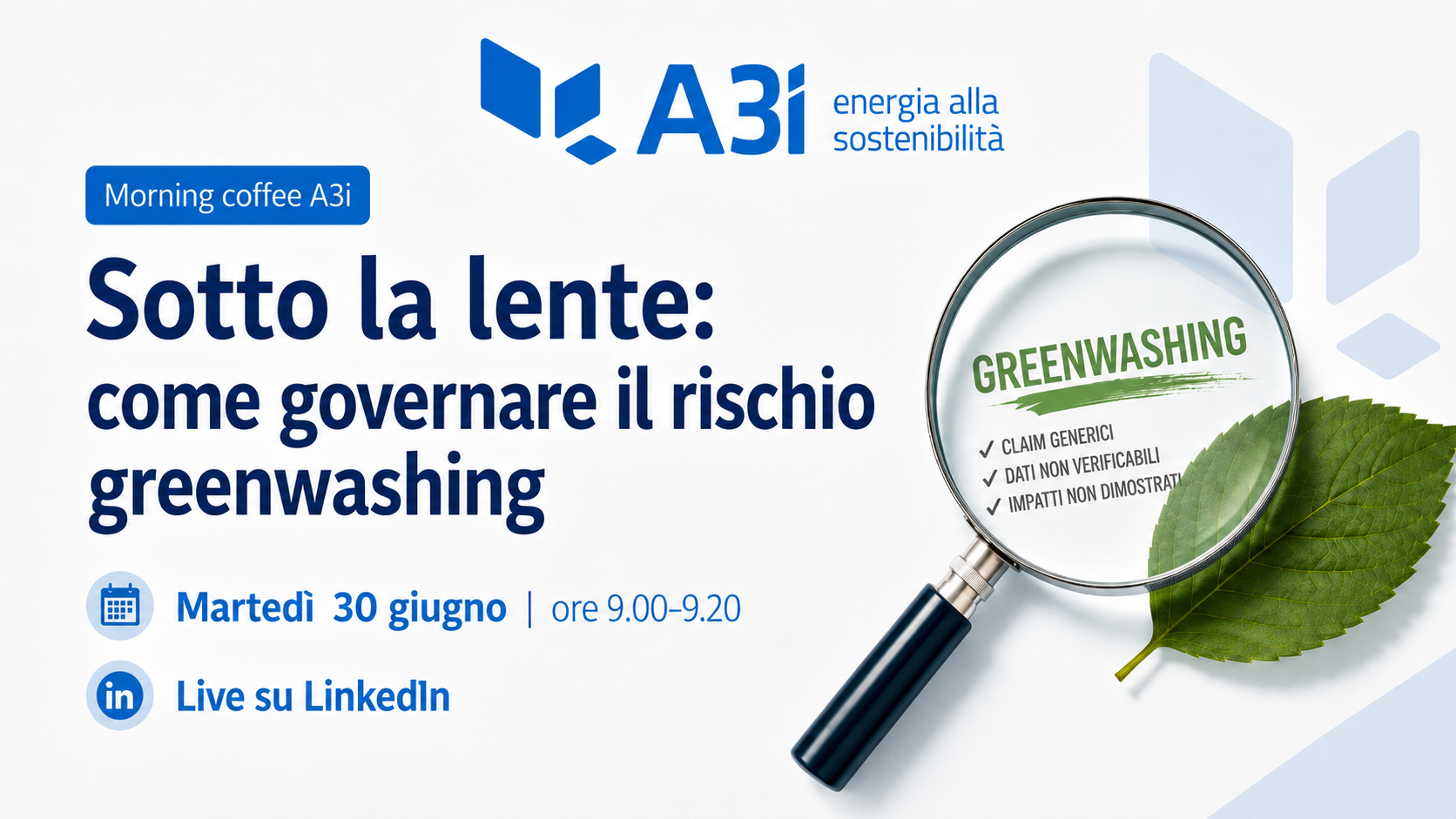
The A3i Morning coffee returns on 30 June: a live LinkedIn conversation on what the new rules mean for companies, and how to communicate sustainability in a credible, verifiable and responsible way.
From 27 September, Italy’s new rules on greenwashing will become applicable. This marks an important step for companies that communicate environmental initiatives, ESG projects, sustainable features of products and services, or commitments linked to the ecological transition.
But this is not just about legal compliance. Greenwashing risk also affects reputation, trust, and relationships with stakeholders, customers and supply chains. Environmental claims that are too vague, impossible to verify or disproportionate to the actions actually taken can expose companies and brands to criticism and disputes, even when their underlying sustainability efforts are real.
To explore these issues, the next A3i Morning coffee will take place live on LinkedIn on Monday 30 June at 9.00 am. The title of the session is “Under the spotlight: how to manage greenwashing risk”.
The conversation will bring together Micol Burighel, Communications Manager at Amapola, and Sabrina Molinar Min, lawyer and consultant working with 3i group’s Corporate Governance area.
Why greenwashing matters now
Sustainability communication has become increasingly strategic. Companies are expected to tell the story of their environmental and social commitments in a way that is clear, accessible and recognisable. At the same time, they must be able to substantiate what they say.
This is where greenwashing risk arises: in the gap between communication and evidence. It is no longer enough to use words such as “green”, “sustainable” or “low impact”. Companies need to define the scope of each claim, provide data and sources, make results understandable and ensure consistency between what they do, what they measure and what they communicate.
Not just claims: all corporate communication is under scrutiny
Greenwashing is not limited to advertising campaigns or environmental claims. It can appear across many areas of corporate communication: websites, sustainability reports, brochures, packaging, commercial offers, institutional presentations, social media content and materials designed for supply chain partners.
That is why the issue calls for an integrated approach. Communications, sustainability, legal, marketing and sales teams need to work together to make messages more robust, verifiable and consistent.
What the A3i Morning coffee will cover
The session will explore a number of key questions: what changes under the new regulatory framework, which companies are affected, how greenwashing risk connects with consumer protection, and what consequences can arise from weak or unsubstantiated environmental claims.
The discussion will also take a practical angle: how to recognise the most common mistakes, which warning signs companies should look out for, and what tools can help build more responsible ESG communication.
Communicate better, not less
Preventing greenwashing does not mean stepping back from sustainability communication. It means doing it with greater rigour: verifiable data, solid processes, precise language and clear responsibilities.
Sustainability remains a key driver of reputation and competitiveness. To communicate it effectively, companies need a story that is evidence-based, measurable and coherent.
Join us live on LinkedIn on Monday 30 June at 9.00 am.